
- Training doesn’t need to be a whole production to be effective. If it requires flights, catering, and three calendars to align… it might be time to simplify.
- You shouldn’t have to choose who gets developed. Great learning strategies don’t pick favorites—they make growth accessible for everyone.
- Completion is nice. Confidence is better. Finishing a course is step one—actually using it at work is where the magic happens.
- In-person time is valuable—use it where it counts. Save it for conversations, connection, and those “you had to be there” moments.
- The best learning fits into real life. If it works with your team’s schedule (not against it), you’re already ahead of the game.
Leadership development has never been more important—or more scrutinized.
Organizations are under pressure to build better managers, prove training ROI, and do it all with tighter budgets and smaller teams. Which is why one question keeps coming up:
Is in-person training or online learning more effective?
Here’s the short answer:
Research shows that online and in-person training are equally effective for learning outcomes, but they serve different purposes.
- Online learning is better for scalability, consistency, and cost efficiency
- In-person training is better for discussion, collaboration, and real-time practice
- Blended learning—a mix of both—delivers the strongest results overall
(Source: U.S. Department of Education, Institute for Work & Health)
So no, this isn’t a format war.
But it is a strategy problem—and most organizations are still solving it the wrong way.
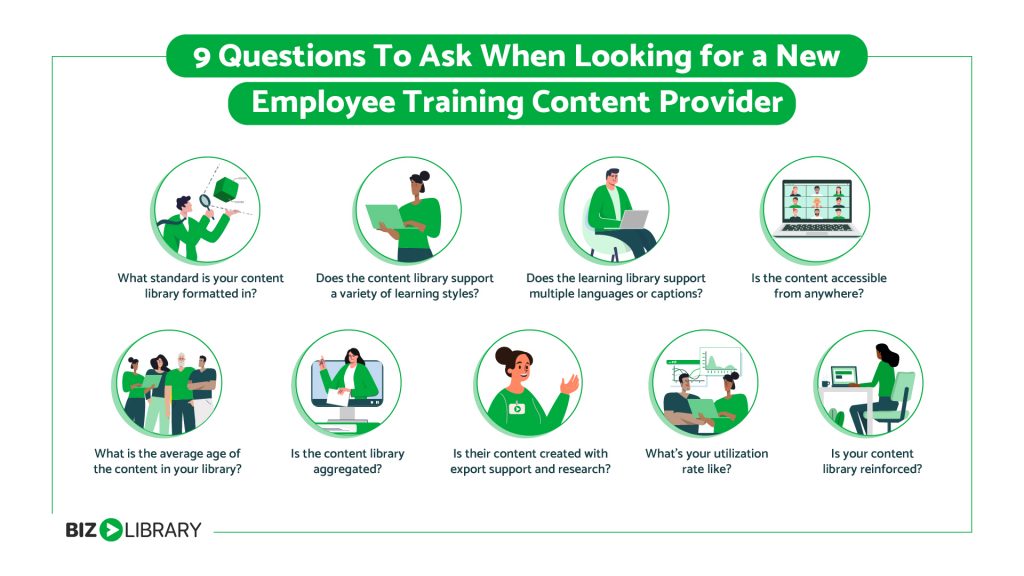
Not sure how to choose the right online learning library? Check out our IG on 9 Questions to Ask a Training Content Provider!
The Debate Isn’t New—But the Stakes Are Higher Than Ever
For years, L&D teams have debated instructor-led training (ILT) vs. eLearning.
But in 2026, the conversation has shifted:.
- Budgets are tighter
- Teams are leaner
- Expectations for measurable impact are higher
And suddenly, the traditional model—fly people into a room, run a workshop, hope it sticks—starts to show its cracks.
Because while in-person training feels impactful, it doesn’t always scale… and it doesn’t always last.
Myth vs. Reality: In-Person vs. Online Training
Let’s clear up a few of the biggest misconceptions.
Myth #1: In-person training is more effective than online learning
Reality: Learning outcomes are often the same.
A meta-analysis from the U.S. Department of Education found that learners in online environments performed as well as or better than those in face-to-face settings, particularly in blended formats.
Similarly, the Institute for Work & Health found no significant difference in effectiveness between real-time online and in-person training for workplace learning.
Translation: It’s not the format—it’s the design.
Myth #2: Online learning is always more engaging
Reality: It’s efficient—but not always preferred.
A peer-reviewed study found that while both formats improved learning outcomes, participants preferred in-person training experiences.
Translation: People can learn online—but they don’t always love it.
Myth #3: In-person training is outdated
Reality: It’s still essential—for the right things.
According to Harvard Business Review, virtual training often falls short when it comes to relationship-building, nuanced communication, and collaboration.
Translation: If it requires trust, nuance, or real-time feedback—humans still matter.
Myth #5: You have to choose between in-person and online
Reality: The best programs use both.
Blended learning consistently produces stronger outcomes than either format alone (U.S. Department of Education).
Translation: It’s not either/or—it’s how you combine them.
In-Person vs. Online Training: A Side-by-Side Comparison
Here’s how the two approaches stack up:
| Dimension | In-Person (ILT) | Online Learning |
| Learning outcomes | ≈ Equal | ≈ Equal |
| Engagement | Higher | Lower (on average) |
| Cost | Higher | Lower |
| Scalability | Low | High |
| Flexibility | Low | High |
| Social learning | Strong | Limited |
The Real Problem: Most Training Is Designed as an Event
Here’s the part most organizations miss.
The issue isn’t whether training is in-person or online.
It’s that most training is designed as a one-time event.
- A workshop
- A seminar
- A compliance session
- A leadership offsite
People show up. They complete it. They check the box.
But then?
Very little actually changes, because there’s no reinforcement, no follow-up, and no connection to real work. Or as many L&D teams quietly admit:
“Butts in seats” doesn’t equal behavior change. Connect with real business metrics to figure out what’s moving the dials.
Why Traditional In-Person Training Breaks Down (Especially for Small Teams)
For small HR teams, ILT doesn’t just present challenges. It creates a constant, frustrating tradeoff.
On paper, in-person training sounds like the gold standard. It’s interactive. It’s immersive. It feels impactful. In practice, it’s rarely built for the realities most teams are operating in.
High Cost Per Learner
In-person training isn’t just the session itself—it’s everything around it.
- Travel and accommodations
- Facilitator fees
- Time away from day-to-day work
- Lost productivity while employees are “off the floor”
Suddenly, that one-day workshop isn’t just expensive—it’s exponentially expensive per learner.
And for small teams with limited budgets, that cost forces tough decisions:
Who gets access to development—and who doesn’t?
Low Retention Without Reinforcement
Even the best workshop has a shelf life.
Without reinforcement, most of what’s learned in a single session fades quickly. Not because the content wasn’t good—but because it wasn’t revisited, practiced, or applied consistently.
There’s no built-in mechanism for:
- Ongoing learning
- Spaced repetition
- Real-time application
So what happens? In the absence of a support system, employees leave energized and then get pulled back into their old routines. A few weeks later, very little has actually changed.
Limited Scalability
In-person training doesn’t scale easily. It’s not repeatable or as consistent as the way an online lesson would be. So much of in-person training is contextual and “limited” in a way, by that context.
You’re constrained by:
- Time
- Location
- Scheduling logistics
- Budget
Which means most organizations end up training:
- High-potential employees
- Senior leaders
- Small pilot groups
Everyone else is expected to figure it out on the job or with online training only. That creates inconsistency across teams—and often reinforces the very gaps training was meant to solve (not to mention the engagement/retention nightmare that the optics of only offering ILT to certain employees and not others would create).
Minimal Application
Most in-person training is built around presentations, discussions, and the occasional breakout activity.
But real skill-building—especially for leadership—requires more than exposure. It requires repetition in real-world situations, with feedback over time.
That’s hard to achieve in a one-time session.
So leaders walk away knowing what they should do but without the confidence to actually do it.
The Hidden Tradeoff No One Talks About
All of this leads to a quiet but constant tension for L&D teams:
Do we invest deeply in a few people—or try to stretch limited resources across everyone?
- Go deep, and you sacrifice scale
- Go wide, and you sacrifice impact
Neither option feels like a real solution.
ILT As We Knew It Doesn't Work Like It Used To
The bigger issue is this:
Traditional in-person training was built for a different era— when teams were centralized, schedules were predictable, and learning could happen outside the flow of work. That’s not the reality anymore – with more than 50% of the U.S. remote-capable workforce in hybrid positions.
Today’s workforce is:
- Distributed
- Time-constrained
- Constantly shifting priorities
Employees in the modern workforce don’t need more one-time events – they need ongoing support that shows up when the work is actually happening.
Leadership isn’t built in a workshop. It’s built over time—through repetition and real-world application.
That’s why leading organizations are moving away from one-time events and toward continuous learning systems.
Case Study: OnPoint Group
OnPoint Group didn’t just rethink training—they reworked the math.
By shifting to a virtual delivery model, they saved $147,000 compared to running a two-day, in-person training event. Not a typo—real money back in the budget.
But here’s where it gets interesting—they didn’t ditch the human side of learning. They doubled down on it.
Instead of cramming everything into a single event or making learning totally self-led and asychronous, they used online learning as the foundation. Then they layered in book clubs, team discussions, and leadership conversations to reinforce it.
So training didn’t end when the session did. It kept showing up in conversations, team dynamics, and how leaders actually led.
There’s not a one-size-fits-all approach to in-person or online training. It’s about finding the strategy that works for your team, and building an approach that supports how your people actually work.
Why Online Learning Libraries Win (Especially on a Budget)
This is where online learning—done right—can feel almost like an extra coworker instead of a tool.
1. Lower Cost, Higher Reach
Instead of deciding who gets development this year, you can actually open access to everyone. No more travel approvals, scheduling nightmares, or long looks at lists of people and knowing that not everyone gets to go.
Just consistent, organization-wide access to leadership and skill development. For small teams, this is huge. You’re no longer rationing development—you’re scaling it.
2. Built for Real Work (Not Ideals)
Your managers don’t have time for a full-day workshop. They’re managing teams, jumping between meetings, and handling their own work.
Online learning libraries meet them in that reality:
- 5–10 minute lessons they can actually finish
- Mobile access for frontline and distributed teams
- On-demand content when a real situation comes up
Example:
A manager has a tough feedback conversation tomorrow. They don’t need a workshop—they need help right now. This is where microlearning has a real edge over ILT – short bursts of knowledge that gives them what they need in the moment.
3. Practice Drives Behavior Change
This is where most training—especially traditional ILT—falls apart.
Unfortunately, knowing what to do isn’t the same as doing it. Online learning platforms (especially modern ones) go beyond content by enabling:
- Scenario-based learning
- Real-world application
Think:
- Practicing a difficult conversation
- Navigating conflict
- Giving feedback
Not once—but over time, as situations come up.
4. Simplicity for HR Teams of One (Because You Don’t Have Time for Complexity)
The last thing you need is another complicated system.
A well-designed learning library simplifies things by:
- Centralizing content and delivery
- Automating assignments and learning paths
- Eliminating spreadsheets and manual tracking
Translation: Less admin. More impact.
5. Content That Actually Gets Used
Nothing is more painful or disappointing in L&D than assigning training and watching no one engage with it. Modern learning libraries solve this by focusing on:
- Short, relevant content
- Real workplace scenarios
- Role-based learning paths
The right learning platform may also have capabilities for personalized recommendations and engines that learn from your employees’ preferences, so that they always receive hyper-relevant content.
6. ROI You Can Actually Prove
This is where online learning really separates itself.
With traditional training, you often end up with:
- Attendance records
- Completion lists
- Anecdotal feedback
With a learning platform, you get:
- Who is engaging (and who isn’t)
- What content is being used
- Progress over time
- Data you can actually bring to leadership
85% of C-Suite surveyed in a Sage HR report said that a lack of analytical skills is often challenge for the HR team. 21% also said that financial growth should a top priority for HR — the 2nd most popular response. The ability to prove decisions with data is a growing differentiator – and infinitely simpler to do with online learning platforms than quantifying a qualitative experience like ILT.
Not sure where to start on tracking training ROI? Download our ready-to-use spreadsheet template!
The Shift: From Training Events to Continuous Learning Systems
What all of this adds up to is a fundamental shift:
From:
- One-time training events
- Limited access
- Hard-to-measure impact
To:
- Continuous development
- Organization-wide reach
- Clear visibility into what’s working
For small teams, this is the difference between managing training and actually driving development.
Where In-Person Training Still Matters
In-person training still has a role. It’s just no longer the foundation. It works best for:
- Leadership discussions
- Real-time conversations
- Team alignment
- Complex problem-solving
In-person creates connection. Online creates consistency.
The Smartest Strategy: Blend, Don’t Choose
The most effective L&D strategies today combine:
- Online learning for scale, access, and reinforcement
- In-person training for discussion, practice, and alignment
Use in-person for moments that matter, creating a big impact that can be supported with online reinforcement later on. Use online learning to sustain that impact and stretch it until your team is ready for the next level and a new ILT experience.
The Bottom Line: Stop Choosing Formats—Start Building Systems
The real shift isn’t from ILT to eLearning.
It’s transitioning from:
- Events to Systems
- Completion to Capability
- Attendance to Impact
If you’re still relying on in-person workshops as your primary training strategy, you’re not alone. But you are leaving impact—and efficiency—on the table.
The future of leadership training isn’t about bigger events.
It’s about better systems.
